 squirrelworks
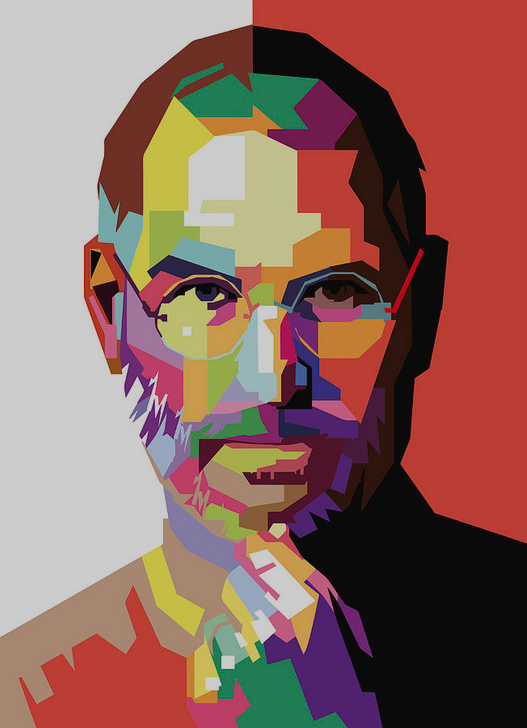
In the corporate world, "difficulty" is often viewed as a character flaw. In the world of elite systems architecture, however, it is frequently a byproduct of a Forensic Audit of Reality. Steve Jobs’s career was not a quest for consensus; it was a relentless campaign to reduce systemic noise and enforce the integrity of the objective truth.
"Simple can be harder than complex: You have to work hard to get your thinking clean to make it simple." — Steve Jobs
Every system naturally tends toward chaos. In IT, this manifests as "technical debt," "bloatware," and "manufactured obstacles." Jobs viewed these not as inconveniences, but as moral failures. His methodology was Aggressive Simplification. If a feature didn't serve the core logic of the user experience, it was an "entropy leak" that had to be plugged.
For the modern analyst, this means looking past the "performative work" of meetings and status reports to find the actual signal. Like Jobs, we must be willing to dismantle a "comfortable" legacy process if it no longer serves the truth of the system.
Jobs was deeply influenced by quality pioneer Dr. Joseph Juran, who taught that every process must have a verifiable "theory." Jobs had zero tolerance for the most dangerous phrase in business: "Because we've always done it that way." He viewed this as intellectual laziness.
Being "difficult" in this context is simply the act of refusing to accept an illogical answer. When we ask "Why?" we aren't challenging authority—we are auditing the system's foundation. If the foundation is built on "tradition" rather than "logic," it is a bug waiting to cause a crash.
Jobs famously stated that his job was not to be "nice" to people, but to make them better. He sought A-Players: individuals who prioritized the mission over their own fragile egos. To Jobs, "vanity" was a systemic inefficiency. If you are more worried about how you feel than whether the circuit board is beautiful, you are a "manufactured obstacle."
This is the "Top 20%" philosophy. It suggests that elite work requires a level of professional transparency that can feel abrasive to those accustomed to "Performative Compliance." In a remote-first sanctuary, this manifests as Radical Accountability.
Being ousted from his own company in 1985 forced Jobs into a "Naked" period of reconstruction. Without the brand of Apple to protect him, he had to prove his architecture was self-sustaining. This era produced NeXT and Pixar—proof that the Sovereign Worker does not need an institutional logo to validate their brilliance.
When a professional’s internal velocity begins to outpace the structural capacity of their environment, the resulting friction is often a signal that it is time for a new stage of development. Rather than viewing this as a setback, it is an opportunity to formalize a personal 'Body of Work'—a private lab or technical brand—that is defined by your own architectural standards rather than the constraints of a legacy system.

Reject Performative Work: If the activity doesn't reduce entropy, it is waste.
Build the Demo: Don't ask for permission to be elite; build the lab that proves you already are.
High-Ground Security: Move to an environment where your "intensity" is seen as a feature, not a bug.
Ultimately, the Jobsian Protocol is about the Integrity of the Machine—whether that machine is a piece of hardware, a SQL database, or a professional life. By refusing to tolerate the "primal" management styles of the past and focusing purely on the logic of the architecture, we move from being "managed employees" to being "Sovereign Architects."
Status: Filed under Misc // Systems Philosophy // Case Study
Core Principle: Systems over Ego.