 squirrelworks
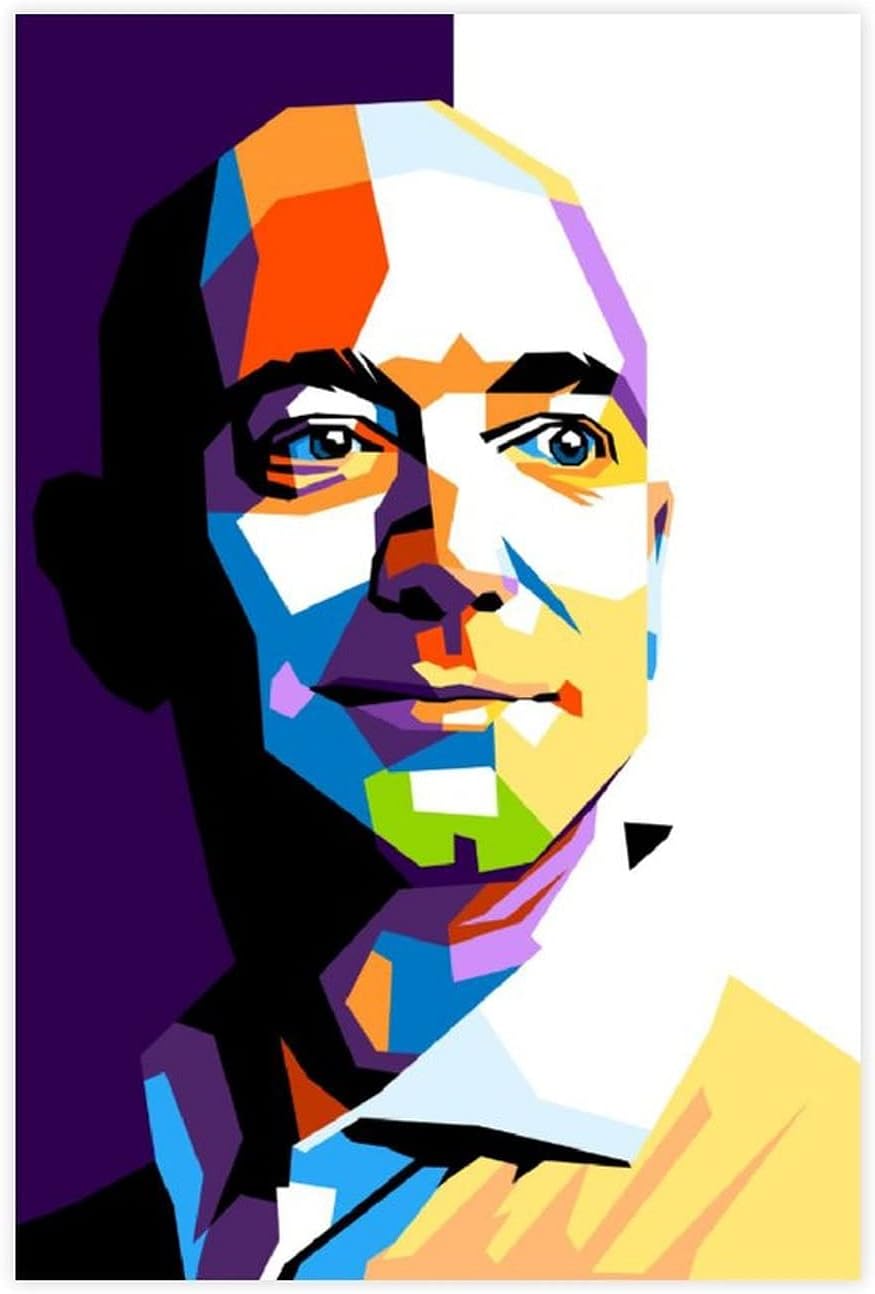
In systems administration, the most dangerous state is not a system crash; it is the quiet acceptance of inefficiency. This analysis draws from Jeff Bezos's 2005 Stanford Entrepreneurship Conference talk, "Taking on the Challenge," where he outlines the necessity of identifying Learned Helplessness—that psychological trap where humans stop noticing the friction in their environment simply because they have been dealing with it for too long.
"Humans are remarkably adaptive. If you encounter a problem for long enough, you stop noticing it. Great inventors let ordinary things bother them." — Jeff Bezos
Before windshield wipers existed, drivers pulled over in the rain to wipe their windows with a rag. They accepted this ritual as a standard cost of driving. Bezos points to this as the ultimate example of Learned Helplessness: the human tendency to adapt to broken processes until they become invisible.
For the sovereign architect, this is a call to conduct a daily audit of your own environment. Whether it is a clunky deployment script, a manual backup routine, or an inefficient terminal workflow, you must ask: "Am I pulling over to wipe the windshield, or am I building a wiper?" If a process annoys you, treat that annoyance as a signal, not a burden.
A major impediment to innovation is the belief that you must choose between two competing negative outcomes. Bezos argues that you should never settle for a trade-off if you can innovate your way out of it. For instance, Amazon aimed to simultaneously improve customer service and lower costs.
The solution was not to choose between humans or automation, but to build customer self-service architecture. By giving users the tools to solve their own problems, the system became more efficient and more satisfying. In your own infrastructure, look for these false dichotomies. Do not choose between "security" and "convenience"; build a system that achieves both through better design.
To innovate rapidly, the cost of failure must be low. Bezos emphasizes that you cannot scale if every minor change requires institutional approval or a massive budget. You must break problems down into the finest granularity possible.
Instead of asking a team to "increase revenue"—which is too abstract—you ask them to optimize a specific pick-path algorithm in a fulfillment center. In your homelab, this means measuring success at the module level. Don't look at the entire cluster; look at the specific container, the specific line of configuration, or the specific latency metric. If you can measure it, you can iterate on it.
Bezos warns against a "siege mentality" where you become hyper-reactive to external forces, competitors, or media narratives. If you are competitor-focused, you have to change every time they change. If you are customer-centric, you focus on the things that will not change over the next decade: selection, price, and convenience.
For the independent professional, this means filtering out bureaucratic friction and the volatility of industry hype. Stay heads-down, obsess over the core needs of those you serve, and treat external distractions as systemic noise that must be ignored to maintain build velocity.

Audit the Ordinary: If a task is annoying but you do it every day, you are suffering from learned helplessness.
Eliminate Trade-offs: Don't compromise. Re-architect the system to satisfy both variables.
Own the Granularity: If you cannot measure whether a specific piece of your stack is getting better, you are looking at the wrong level.
The final takeaway from Bezos is the necessity of being stubborn on vision but flexible on details. You must be willing to abandon a specific tactic if the data proves it doesn't work, but you can never abandon the core principle of your architecture. By staying close to the metal, questioning the status quo, and refusing to let institutional friction dictate your pace, you operate as a truly sovereign entity.
Status: Filed under Misc // Systems Philosophy // Case Study
Core Principle: Stubborn vision, flexible execution.
Bezos, J. (2005). Taking on the Challenge: Jeffrey Bezos, Amazon. Stanford Graduate School of Business.